Croacia by camper in 21 days
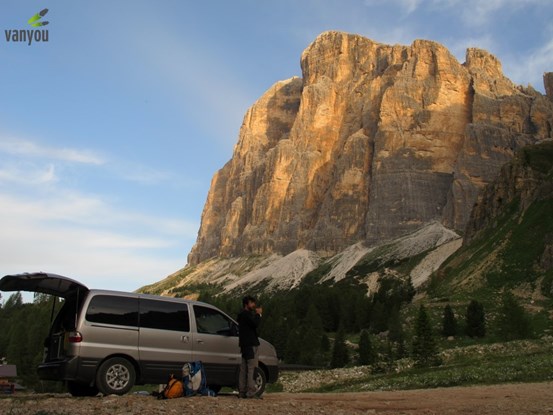
Te proponemos viajar a Croacia con una furgoneta camper.
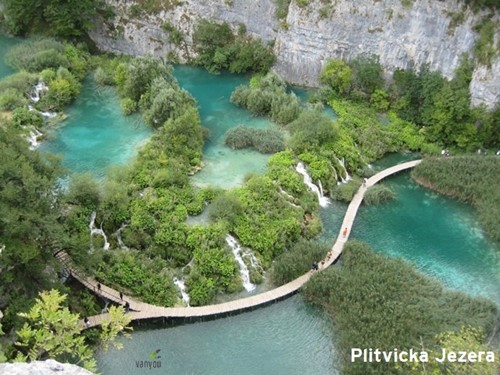
Son muchas las cosas que este país nos ofrece: Una costa espectacular y un interior montañoso con ciudades y pueblos históricos. Naturaleza, cultura, gastronomía y bellos paisajes se unen para hacer que este destino sea especialmente atractivo.
Key Points
- A country to enjoy by camper
- Spectacular coast and a mountainous interior with historic towns and cities
- 21 days of travel in total
- Around 5,000 km covered
We suggest traveling to Croatia in a camper van. There are so many things this country has to offer: a spectacular coastline and a mountainous interior with historic towns and villages. Nature, culture, gastronomy, and beautiful landscapes come together to make this destination especially appealing.
Key points
21 days of travel in total
Around 5,000 km driven
A country to enjoy by camper van
Croatia has seven excellent national parks: Brijuni, near Pula, stands out for its well-preserved Mediterranean holm oak forests. The mountainous Risnjak and Paklenica National Parks offer great hiking routes. In Plitvice Lakes National Park you can find bears, wolves, and deer.
As for accommodation, there is a wide variety, but we suggest taking advantage of the natural corners Croatia offers and, if you like, combining it from time to time with a campsite. You’ll find plenty of places in Croatia and across Europe to spend the night. Always be respectful of the environment and local residents so we can all continue to enjoy these places.
We didn’t use any campsites; we were self-sufficient with our camper. In these lines we want to give you some ideas so you can plan your own route based on our experience. We’ve prepared a travel diary with some practical notes, the places visited, and the kilometers driven each day, so you can get an approximate idea of what you can visit and cover in a day.
This trip took place in 2009, so we recommend treating prices as indicative only. Croatia is a very peaceful country to travel through by camper van, so we encourage you to discover it this way. Try to plan ahead where you’re going to spend the night. If you don’t, don’t leave it until the last hour of the day—sometimes it’s hard to find a spot. Our first night, a police officer woke us up in the early morning and told us that in Croatia it was forbidden throughout the country to sleep outside campsites. From then on we chose our overnight spots very carefully, but we had no further incidents during our stay.
DAY 1 — VALENCIA–SAINT CHAMAS (800 km)
First day of the trip. At last, it’s here! After preparing for a long time, the long-awaited day has arrived. A road-trip day awaits us—one of those “in-between” days, but no less important because we’re on holiday! We leave Valencia via the V21 and then head toward Castellón on the CV-10 to Cabanes to avoid the toll. We connect with the new road to Torreblanca; so far we’ve saved a few euros. Here we’ll take the AP7, but we’ll exit at Hospitalet de l’Infant and continue on the A7 almost to Torredembarra—more highway kilometers without tolls. From here we’ll need to rejoin the AP7. We reach La Jonquera and cross into France. In summer, traffic jams are common, so patience—after all, we’re on vacation! We’ll take the A9 and stay on it until Nîmes.
It’s well known that around Marseille and the surrounding coast you should be careful about where you spend the night—many of you will have heard about thefts, and above all you shouldn’t sleep at service areas. We chose Saint Chamas: a very quiet town, and when you wake up in the morning you’ll have a great impression of the place. We leave Nîmes and the A9 behind, take the A54, and finally arrive in Saint Chamas.
DAY 2 — SAINT CHAMAS–SAN GIULIANO PARKING (VENICE) (780 km)
From one camper-friendly spot to another. We decided to stop for a day in Venice—it’s on the way and definitely worth it if you don’t know the city (even if you’ve been before!). And in Venice there’s a great place to sleep: San Giuliano Parking, monitored with a barrier, and it only costs €5—well worth it!
DAY 3 — VENICE
Right next to the parking where we slept is the dock. From here you take the boat to Venice: €15 return per person. Departures every hour. After spending the day wandering Venice’s streets, we decided to continue our journey and stop at Sistiana beach, where we found a place to sleep—only 140 km from Venice. This is a perfect overnight spot: it’s a paid “blue zone” parking lot during the day, with no barrier, and the views are spectacular. Sorry we don’t have the coordinates!
DAY 4 — TRIESTE–CROATIA (100 km)
Very close to Sistiana is the big city of Trieste with iconic buildings—worth a walk around.
The Croatian border is very near, but to enter by road you have to pass through Slovenia. If you take the motorway you’ll need to pay the “vignette”: €15 for one week and €30 for one month. We didn’t feel like paying for such a short stretch, so we went on national roads instead.
At last we’re in Croatia. Our first stop is the town of Novigrad. We exchange money: €1 = 7.11 Kuna. From here we begin discovering the beautiful cobbled towns of the Istrian peninsula. We visit Poreč and then stay in Rovinj, a gorgeous place. In Poreč there’s a camper-friendly spot to spend the night, and in Rovinj there’s a motorhome area.
DAY 5 — ROVINJ–PULA–LABIN–LOVRAN (120 km)
Today we leave Rovinj and arrive in Pula. A must-see is its spectacular Roman Amphitheatre. You’ll find a parking lot near the Amphitheatre that costs 12 kuna for 3 hours and lets you visit the city calmly. Entry to the Amphitheatre costs 20 kuna per person. From there to the Castle (10 kuna per person), then the old town, the Temple of Augustus, and the Roman Theatre.
From Pula we head to Labin, a very pretty town. Parking here is free. From Labin we drive toward Rijeka and stop at the beach on the way—our first swim in Croatia! Tonight we sleep near the town of Lovran, in a parking lot.
DAY 6 — LOVRAN–RIJEKA–BAKAR–KRALJEVICA–BAŠKA (100 km)
We head to Rijeka and the city’s huge shipyards catch our attention. We park near the center and walk around; we want to buy some guidebooks. We buy them at the RI-BOOK bookstore—by the way, you can connect to the internet right there.
We pass through Bakar and reach Kraljevica, where we take a ferry to cross to the island of Krk (€4). After visiting the island via Punat, we head to Baška and spend the afternoon at a climbing area right next to the beach.
To reach the climbing area you have to pass through a nude campsite. After climbing, with the sunset, it feels mandatory to take a swim and enjoy the calm sea. Tonight we’ll sleep near this area on a road pull-off. The next day we’ll visit another climbing area very close to where we slept.
If you don’t climb, we suggest an alternative: sleep in Punat or in Vrbnik.
DAY 7 — BAŠKA–VRBNIK–RISNJAK (80 km)
We climb in another area in the morning and then visit Vrbnik. We set off toward Risnjak Park, and when we cross the bridge from the island back to the mainland we realize it’s free! You pay to enter the island, but not to leave.
The road to Risnjak is very beautiful. We arrive in the afternoon and it looks like people have already left. Entry costs 40 kuna per person but is valid for two days. Today we have time for a short hike of about two hours. The place is gorgeous: absolute peace, pleasant temperature, huge pines and beech trees! We sleep here.
DAY 8 — RISNJAK–SENJ–BRINJE (110 km)
Today we want to see the source of the Kupa River. You have to reach the village of Razloge. You leave the van here and start a walk through a beautiful beech forest for about 25 minutes. Just follow the marked path and descend to the valley floor. Finally you reach the spring. It’s simply spectacular: a water source that forms a deep blue pool, and when it overflows it creates the stream that becomes the river. We won’t give more details so you can discover them yourselves. It’s absolutely worth visiting this magical and solitary place.
Our destination now is Senj, where we stop to shop at the MERCATOR supermarket chain and take a swim. We continue toward Plitvička Jezera Park. It’s getting a bit late, so we decide to stop along the way and arrive at the park calmly the next day. Near the village of Brinje there’s a free camping area: a green clearing with trees, perfect for the night.
DAY 9 — PLITVIČKA JEZERA–ZADAR (160 km)
In just half an hour we reach the park. The road is beautiful, crossing a mountain pass with lovely views. When you arrive you realize it’s set up heavily for tourism—very different from where we came from. Entry costs 110 kuna per person and includes bus and electric boat transport. We spend the morning in the park.
Parking costs 50 kuna. Here, unlike Risnjak, there are loads of people. That doesn’t mean it’s not worth it. There are several routes inside the park to see the spectacular lakes, waterfalls, and caves.
In the afternoon we head to Zadar; this time we take the motorway to save time: 66 km of motorway, 30 kuna. Zadar is well worth seeing, with an important historic center. We recommend the sunset by the sea, the wind organ, and right next to it a light installation that activates with the wind.
Our destination is Paklenica, a climbing destination. On the way we find a jetty where we spend the night (check Google Maps). Note that people may show up at night at this spot.
DAYS 10–11 — ZADAR–PAKLENICA (50 km)
Today we reach Paklenica, which is very close. We’ll stay here three days. Entry costs 80 kuna per person for the three days. This is an outstanding limestone climbing area, popular with climbing families, and you can also do beautiful hikes. In the climbing area itself they’ve carved bathrooms into the rock—very convenient—and there’s a small shop. The beach is nearby, so you can enjoy sunsets and swims.
DAY 12 — PAKLENICA–ŠIBENIK–TROGIR (150 km)
Today we leave the park—but with the intention of coming back someday. We take the motorway for about 90 km (49 kuna). We arrive in Šibenik; its old town is gorgeous. We especially like St. James Square, and the cathedral is impressive both outside and inside. We visit St. Michael’s Fortress (20 kuna per person) with wonderful views. We leave the city toward Krka National Park (90 kuna per person) with its beautiful waterfalls. We swim here and then visit the park. It’s packed with people, so keep that in mind!
In the afternoon we head toward Trogir and will sleep somewhere along the coast. We suggest this campsite or this camper-friendly spot.
DAY 13 — TROGIR–SPLIT–DRVENIK PORT–SUĆURAJ (120 km)
Trogir is a lovely town, rectangular in shape and surrounded by two channels. We visit the cathedral and the street market. Parking here is paid. We head to Split.
Split leaves us speechless: the underground halls of Diocletian’s Palace (25 kuna per person), the bell tower (10 kuna), and simply wandering the streets. A must-stop! We find a fairly economical parking lot: 4 hours for about 20 kuna.
We want to catch the ferry to Hvar Island. From Split we go to Drvenik (90 km). The ferry from here is very short, and you can swim at the beaches if you have to wait. They only sell us a one-way ticket: 96 kuna for the van and 13 kuna per person. The ferry drops us in Sućuraj.
DAY 14 — SUĆURAJ–HVAR (60 km)
We found a place to sleep off the main road. As soon as you leave Sućuraj, everything becomes very quiet.
The next day, driving along the road, on a curvy section you arrive at what looks like an abandoned hotel. This could be a good place to spend the night—and of course to take a swim first thing in the morning, which is what we did. Very, very quiet place (you can see it on the Google link).
We spend the day at a climbing area called Šuplja Stina, a beautiful spot with crystal-clear beaches. Access costs 42 kuna. In the afternoon we reach the capital, Hvar. Highly recommended: very pleasant, touristy, with many restaurants and bars. Before reaching the city, on the left there’s a large parking area for motorhomes and vans for 100 kn all day, and it’s also a good place to sleep.
There’s also this camper-friendly spot, although it isn’t in Hvar.
DAY 15 — HVAR–STARI GRAD–SUĆURAJ–STON (155 km)
Today we take advantage of the day to do laundry (50 kn), and the same place has showers for 25 kn. Mid-morning we head to Stari Grad, the second most important town on the island, and then to another climbing area, Zaštražišće.
In the afternoon we go back to Sućuraj to return to the mainland. We head to Ston; just as you enter the town, on the left there’s a very large parking lot. We spend the night there. The next day we realize there’s a police building at the end of the parking area!
We also suggest this camper-friendly spot and this campsite.
DAY 16 — STON–MLJET–DUBROVNIK (135 km)
Today we cross to the island of Mljet. One third of the narrow island forms a natural park. Among its greatest attractions are two saltwater lakes surrounded by small slopes covered in pines. It can be visited in a single day. We take the ferry from Ston (400 kuna for two people + van, return). The trip takes about 45 minutes. After disembarking, we head toward Polače, the entrance to the park (90 kn per person).
Inside the park you take a small boat to St. Mary’s island and from there to Mali Most. We spend the day at the lakes, enjoying swims and walking between the big lake and the small one.
In the afternoon we return to Ston, take the ferry back, and arrive around 20:00. We head toward Dubrovnik. About 12 km before Dubrovnik, next to a jetty, we find a place to have dinner and sleep. Along the road to Dubrovnik there are many pull-offs where you can surely find somewhere. If you find nothing, you can pass Dubrovnik and 7 km later you have this.
DAY 17 — DUBROVNIK–MOSTAR–LOKVIČIĆI (280 km)
We recommend visiting Dubrovnik early in the morning. You’ll need to park in the city; near the old town there are blue-zone parking areas, but it’s quite hard to find a spot. Look for a parking lot a bit farther out. The city walls open at 8:15 (50 kn per person). Rent an audio guide (40 kn per person)—it’s worth it. If you can be there at that time, you’ll enjoy the visit with fewer people. From 10:00 onward the crowds of tourists start arriving. Enjoy the city.
We thought it would be interesting to go to Bosnia and visit Mostar. It’s relatively close. The truth is it’s very striking—a radical change. You come from Dubrovnik, where any minimal trace of the war has been erased, and here it’s the opposite. We visit the famous bridge, Stari Most, rebuilt by Spanish soldiers.
At night we head toward Zagreb, Croatia’s capital. We find a place to sleep about 30 km before the motorway, in the village of Lokvičići, at the school entrance—since it’s summer, there’s no school!
DAY 18 — ZAGREB–ŽMINJ (230 km)
We leave the village and after 30 km take the motorway. We arrive in Zagreb and spend the day walking around. That same day we decide to head toward Rijeka and reach the village of Dvigrad, where we’ll do the last climbing day. We’ll sleep in Žminj, specifically in Kanfanar, in a small square in the village.
If you want to sleep in Zagreb: camper-friendly spot —
DAY 19 — DVIGRAD–SISTIANA (120 km)
We spend the morning at the climbing area. In the afternoon we do last-minute shopping in Poreč. Last sunset, last swim. We want to sleep in Sistiana in the same place as on the way out.
DAY 20 — SISTIANA–SAINT CHAMAS (905 km)
A full day of driving on the way back home.
DAY 21 — SAINT CHAMAS–VALENCIA (800 km)
Arrival home and end of the trip.
As always, we ask you to be respectful of the environment you visit: leave no trace, and take all the waste you generate with you.